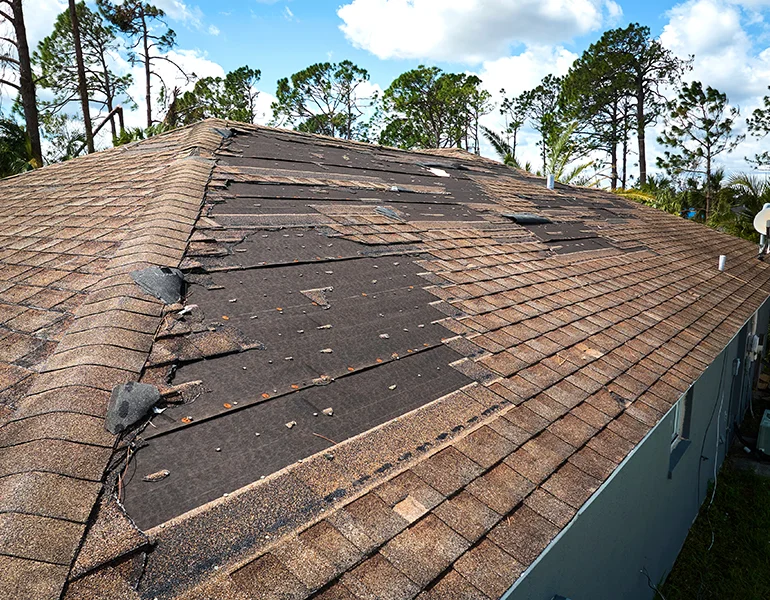
Your roof protects everything beneath it, but it can't speak up when something's wrong. That's why knowing the warning signs of roof damage is so important. Catching problems early means simpler, less expensive repairs. Ignoring them can lead to major water damage, structural issues, and emergency replacement costs.
In this guide
Florida roofs face unique challenges: intense UV radiation, high humidity, torrential rains, and hurricane-force winds. These conditions accelerate wear and create problems faster than in other climates. In this guide, we'll cover the eight most critical signs that your roof needs professional attention, with specific insights for Florida homeowners.
Sign #1: Missing, Cracked, or Curling Shingles
The most visible sign of roof problems is damage to the shingles themselves.
What to Look For
Inspect your roof from the ground or use binoculars:
- Missing shingles: Bare spots where shingles have blown off
- Cracked shingles: Visible splits or fractures in the material
- Curling edges: Shingles lifting at corners or edges
- Cupping or buckling: Shingles that appear wavy or distorted
- Bald spots: Areas where granules have worn away
Why It Happens in Florida
Florida's climate accelerates shingle deterioration:
- UV exposure: Constant sun breaks down asphalt binders
- Thermal cycling: Daily temperature swings cause expansion and contraction
- Storm damage: High winds lift and tear shingles
- Humidity: Moisture promotes biological growth and accelerates decay
The Risk of Ignoring It
Damaged shingles expose your roof to:
- Water intrusion: Leaks that damage decking, insulation, and interior
- Wind uplift: Once edges lift, more shingles can blow off
- Progressive damage: One damaged area leads to adjacent failures
- Reduced lifespan: Accelerated aging of the entire roof system
When to Act
A few missing shingles after a storm is normal and repairable. But if you see widespread damage, curling across the roof, or shingles that crumble when touched, you may be looking at a larger problem. For isolated damage, prompt roof repair can prevent expansion.
Sign #2: Granules in Your Gutters
Asphalt shingles are coated with granules that protect them from UV damage. Losing these granules is a serious concern.
What to Look For
Check your gutters and downspouts regularly:
- Sand-like accumulation: Granules collect in gutters after rain
- Buildup at downspout outlets: Granules wash to discharge points
- Dark spots on shingles: Exposed asphalt where granules are missing
- Granules on ground: Below downspouts or in landscaping
Normal vs. Concerning
Some granule loss is normal:
- New roofs: Shed excess granules for 1-2 years
- After storms: Some dislodging is expected
- Minimal accumulation: Small amounts are not concerning
Excessive loss is a problem:
- Heavy accumulation: Thick layers in gutters
- Bare asphalt visible: Granule-free areas on shingles
- Accelerating loss: More each year
Why It Matters
Granule loss accelerates roof aging:
- UV damage increases: Exposed asphalt degrades rapidly
- Shingles become brittle: Material dries out and cracks
- Waterproofing fails: Granules help shed water
- Lifespan shortens: Significantly reduced remaining life
For more on shingle conditions, see our Florida shingle lifespan guide.
Sign #3: Water Stains on Ceilings or Walls
Interior water stains are the most obvious indication of an active or recent roof leak.
What to Look For
Inspect your ceilings and walls regularly:
- Brown or yellow stains: Discoloration on ceiling surfaces
- Bubbling or peeling paint: Moisture behind painted surfaces
- Water marks on walls: Especially near roofline
- Damp or wet drywall: Soft spots when pressed
- Mold or mildew growth: Black spots or musty odor
Tracing the Source
Water can travel before dripping, making source identification tricky:
- Follow the stain upward: Water runs down before dripping
- Check the attic: Look above the stain for wet spots
- Inspect roof above: Look for obvious damage in that area
- Consider penetrations: Vents, skylights, and chimneys are common leak points
The Urgency Factor
Active leaks demand immediate attention:
- Structural damage: Wet wood rots and weakens
- Mold growth: Begins within 24-48 hours of water intrusion
- Electrical hazards: Water near wiring creates fire and shock risks
- Insulation damage: Wet insulation loses effectiveness and grows mold
If you see water stains, schedule a professional roof inspection immediately. Even old, dry stains indicate a problem that may recur.
Get your Roof Inspection quote.
Free on-site inspection · fast, local scheduling · no pressure.
Sign #4: Sagging Roof Deck or Roofline
A sagging roof is one of the most serious warning signs, indicating structural failure.
What to Look For
Observe your roofline from the street or yard:
- Dips or waves in the roofline: Should be straight and level
- Low spots between rafters: Visible from ground or attic
- Soft or spongy feeling: When walking on the roof (professionals only)
- Bowing in the attic: Decking curves between rafters
Common Causes
Sagging typically results from:
- Water damage: Rotted decking or rafters
- Excessive weight: Too many roofing layers, snow (rare in Florida), or debris
- Inadequate support: Original framing undersized or damaged
- Age and deterioration: Long-term structural degradation
- Storm damage: Structural damage from hurricanes or fallen trees
Why It's Urgent
Sagging indicates imminent failure potential:
- Collapse risk: Weakened structure may fail
- Widespread damage: Problem is structural, not just cosmetic
- Water pooling: Low spots collect water, accelerating damage
- Full replacement needed: Cannot be patched or repaired
If you notice any sagging, stop using the attic and contact a roofing professional immediately. This situation requires expert evaluation.
Sign #5: Damaged or Missing Flashing
Flashing is the metal material that seals joints, transitions, and penetrations in your roof.
What to Look For
Inspect flashing areas carefully:
- Around chimneys: Metal collars and step flashing
- Around vents and pipes: Rubber boots and metal flanges
- In valleys: Metal channels where roof planes meet
- At walls: Where roof meets vertical surfaces
- Around skylights: Frames and mounting flanges
Signs of Flashing Problems
Look for these warning signs:
- Rust or corrosion: Orange or brown discoloration
- Lifting or separation: Flashing pulling away from surface
- Missing sections: Gaps where flashing should be
- Cracked sealant: Dried, crumbling caulk around flashing
- Stains below flashings: Water intrusion evidence
Why Flashing Fails
Florida conditions stress flashing:
- Thermal movement: Expansion and contraction break seals
- UV degradation: Sun breaks down sealants
- Storm damage: Wind and debris dislodge flashing
- Age: All sealants eventually fail
Flashing repairs are often straightforward when caught early. Delayed repairs lead to water damage in the most vulnerable areas of your roof.
Sign #6: Moss, Algae, or Mold Growth
Biological growth on your roof is more than a cosmetic issue.
What to Look For
Biological growth takes several forms:
- Dark streaks: Black or dark green algae stains
- Green fuzzy growth: Moss, especially on shaded areas
- Lichens: Gray-green crusty patches
- Mold: Black or dark patches, often near leaks
Why It's a Problem
Biological growth damages roofing materials:
- Moisture retention: Growth holds water against shingles
- Root penetration: Moss and lichens root into materials
- Accelerated decay: Constant moisture speeds deterioration
- Appearance degradation: Reduces curb appeal and home value
- Shingle lifting: Growth can physically lift shingle edges
Treatment Options
Addressing biological growth:
- Professional cleaning: Soft wash with appropriate chemicals
- Zinc or copper strips: Installed at ridge to prevent regrowth
- Tree trimming: Reduce shade that promotes growth
- Improved ventilation: Reduce moisture that growth needs
Note: Never pressure wash an asphalt shingle roof. The high pressure destroys granules and shortens roof life significantly.
Sign #7: Daylight Through the Roof Boards
If you can see light in your attic when you shouldn't, your roof has serious gaps.
What to Look For
During daylight, inspect your attic:
- Visible light points: Anywhere light shines through the deck
- Bright spots around vents: Poorly sealed penetrations
- Light at roof edges: Gaps in soffit or fascia connections
- Gaps in decking: Visible separations between boards
What It Means
Visible daylight indicates:
- Active leak paths: Water will enter where light does
- Structural gaps: Decking or framing has separated
- Failed seals: Penetrations no longer watertight
- Storm damage: Wind may have displaced materials
The Exception
Small gaps around properly installed vents may be normal, as some vent designs have visible gaps that are covered by the vent cap. If you're unsure whether what you're seeing is normal, have a professional evaluate it.
Sign #8: Increased Energy Bills
A sudden increase in heating or cooling costs may signal roof problems.
The Connection
Your roof affects energy efficiency through:
- Attic ventilation: Poor ventilation traps heat, overworking AC
- Insulation performance: Wet insulation loses R-value
- Air infiltration: Gaps allow conditioned air to escape
- Radiant heat: Damaged reflective barriers increase heat gain
What to Investigate
If energy bills spike unexpectedly:
- Check attic temperature: Should be within 10-15 degrees of outside
- Inspect insulation: Look for wet, compressed, or missing areas
- Verify vent function: Ensure vents aren't blocked
- Look for daylight: Gaps indicate air infiltration
- Check past leak areas: Previous leaks may have damaged insulation
For more on roof-related energy issues, see our attic ventilation guide.
Double Benefits
Addressing roof-related energy problems provides:
- Lower utility bills: Ongoing savings
- Improved comfort: More consistent temperatures
- Extended HVAC life: Less strain on equipment
- Prevented damage: Water intrusion issues resolved
What to Do When You See These Signs
If you've identified any of these warning signs, here's your action plan:
Immediate Steps
- Document what you see: Take photos and notes
- Check for active leaks: Look for current water intrusion
- Assess urgency: Is this an emergency or can it wait briefly?
- Protect interior: Move valuables from under leak areas
Next Steps
- Schedule a professional inspection: Don't try to diagnose yourself
- Get multiple opinions if needed: For major issues, consult more than one contractor
- Understand your options: Repair vs. replacement considerations
- Check insurance coverage: Some damage may be covered
- Plan for repairs: Budget and schedule appropriately
Choosing a Contractor
Select your roofing professional carefully:
- Verify licensing: Florida requires roofing contractors to be licensed
- Check insurance: Liability and workers' compensation coverage
- Read reviews: Past customer experiences
- Get written estimates: Detailed scope of work and pricing
For more guidance, see our contractor selection guide.
Get your Roof Inspection quote.
Free on-site inspection · fast, local scheduling · no pressure.
Preventive Measures
The best way to avoid major repairs is to catch problems early:
Regular Inspections
- Annual professional inspection: Catch problems before they worsen
- Post-storm checks: Look for visible damage after severe weather
- Seasonal visual inspections: Quick ground-level observations
Routine Maintenance
- Gutter cleaning: Prevent backup and overflow
- Tree trimming: Keep branches away from roof
- Debris removal: Clear leaves and debris that trap moisture
- Biological treatment: Address algae and moss before damage occurs
For a complete maintenance schedule, see our Florida roof maintenance checklist.
Conclusion
Your roof gives you warning signs before major failures occur. By knowing what to look for and acting promptly when you see problems, you can prevent small issues from becoming expensive emergencies. Regular inspections and maintenance are far less costly than emergency repairs or premature replacement.
If you've noticed any of these signs on your Florida home, don't wait. Contact Pro Specialty Services for a thorough roof inspection. We'll assess the situation honestly, explain your options clearly, and help you make the best decision for your home and budget. Early detection is the key to affordable roof care.
Related Services
More on Roof Inspection
Vinyl vs Aluminum Soffit: Which Is Best for Florida Homes?
Next →Flat Roof Maintenance Guide for Florida Buildings
Get Roofing Tips
Seasonal maintenance reminders and honest advice from the crew. No spam.