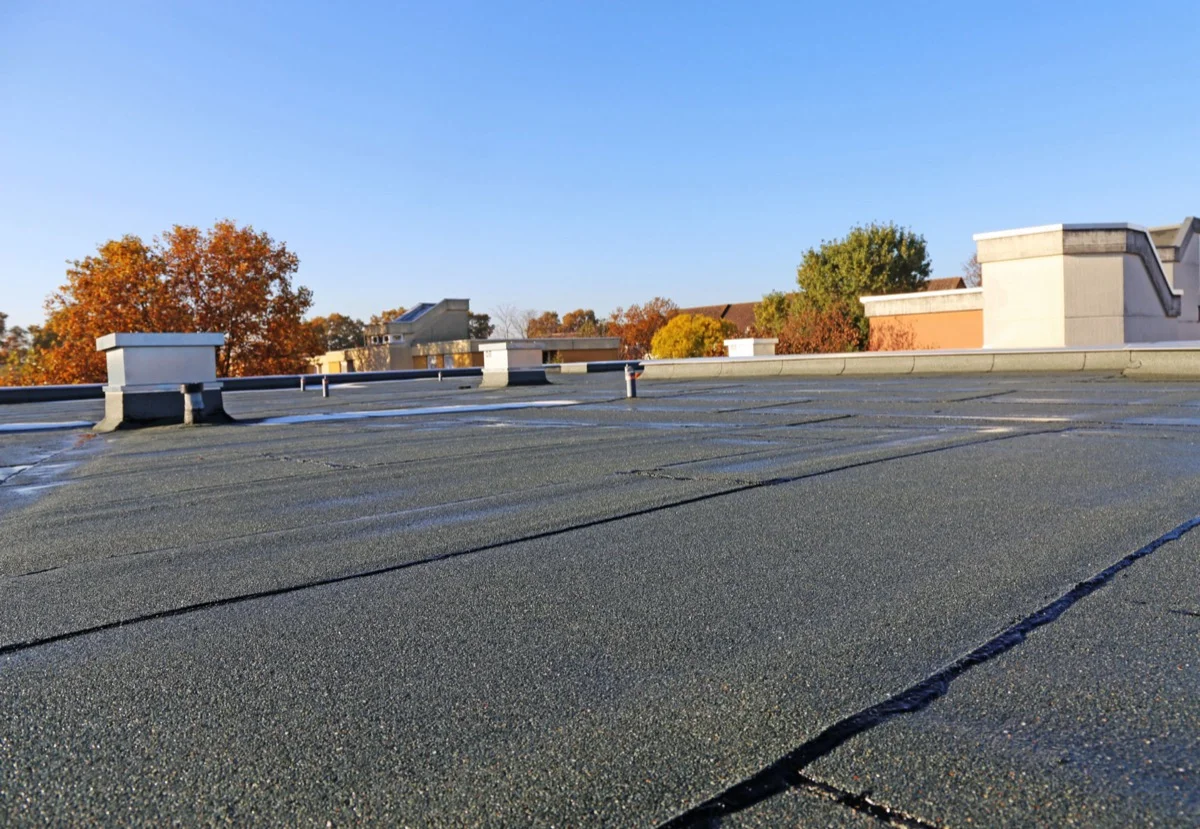
Flat and low-slope roofs are common on Florida commercial buildings and many residential additions. While these roofing systems are durable and cost-effective, they require specific maintenance practices to prevent premature failure. This guide covers what Florida property owners need to know.
In this guide
Types of Flat Roofing in Florida
Before discussing maintenance, understand your roof type:
- TPO (Thermoplastic Polyolefin): White single-ply membrane, heat-welded seams
- PVC (Polyvinyl Chloride): Similar to TPO, excellent chemical resistance
- EPDM (Rubber): Black or white rubber membrane, adhered or mechanically fastened
- Modified Bitumen: Rolled asphalt sheets, torch-applied or self-adhered
- Built-Up Roofing (BUR): Multiple layers of asphalt and felt, gravel surface
- Spray Foam: Polyurethane foam with protective coating
Each system has specific maintenance requirements.
Universal Maintenance Practices
Regular Inspections (Quarterly)
Flat roofs should be inspected at least four times per year - more frequently for older systems. Check after major storms. Look for:
- Ponding water (standing water 48+ hours after rain)
- Membrane damage, tears, or punctures
- Seam separation or lifting
- Flashing failure at walls, curbs, and penetrations
- Debris accumulation
- Drain, scupper, and gutter blockages
- HVAC unit damage to surrounding roofing
- Vegetation growth
Drainage Maintenance (Monthly)
Proper drainage is critical for flat roofs. Water that doesn't drain causes:
- Accelerated membrane deterioration
- Increased structural load
- Ponding that attracts mosquitoes
- Leak development at stressed areas
Clear all drains, scuppers, and gutters monthly. Remove leaves, debris, and any sediment buildup.
Debris Removal (As Needed)
Keep the roof surface clear of:
- Leaves and organic debris (decomposing material damages membranes)
- Branches (can puncture membranes, especially during storms)
- Trash and foreign objects
- Equipment left by HVAC or other contractors
Use soft brooms or leaf blowers - never sharp tools that could puncture the membrane.
System-Specific Maintenance
TPO and PVC Membranes
These single-ply systems are durable but need attention to:
- Seams: Heat-welded seams are the system's strength, but check for any separation or fish-mouths
- Flashings: Ensure membrane flashings remain adhered to walls and curbs
- Surface: Look for punctures, especially around high-traffic areas and HVAC units
- Cleaning: Periodic cleaning maintains reflectivity and energy efficiency
TPO and PVC can be cleaned with mild soap and water. Avoid petroleum-based solvents.
EPDM (Rubber) Roofing
EPDM requires attention to:
- Seams: Adhesive seams can fail - look for lifting edges
- Shrinkage: EPDM shrinks over time, pulling at flashings and edges
- UV degradation: Check for surface cracking or crazing
- Ponding areas: EPDM is particularly susceptible to breakdown in ponding areas
EPDM can be cleaned with water. Treat algae and mildew promptly.
Modified Bitumen
Mod-bit systems need monitoring for:
- Seam integrity: Check overlaps for adhesion failure
- Granule loss: Like asphalt shingles, granules protect the surface
- Blistering: Bubbles in the surface that can rupture
- Cracking: Indicates aging and UV damage
Keep foot traffic to designated walkways when possible.
Built-Up Roofing (BUR)
Traditional BUR systems require:
- Gravel coverage: Ensure gravel surface remains complete - bare spots accelerate aging
- Blister monitoring: Large blisters should be professionally addressed
- Edge condition: Check metal edging for corrosion or lifting
- Flashing: Built-up flashings can develop cracks with age
Don't redistribute gravel yourself - improper walking technique damages underlying membranes.
Spray Foam Roofing
Foam roofs need:
- Coating condition: The protective coating is critical - check for wear, especially at high-traffic areas
- Recoating schedule: Plan for recoating every 10-15 years
- Bird damage: Birds sometimes peck at foam - address holes promptly
- Ponding: Ensure proper drainage - foam shouldn't stay submerged
Get your Flat Roofing quote.
Free on-site inspection · fast, local scheduling · no pressure.
Addressing Common Problems
Ponding Water
Water that remains on the roof 48+ hours after rain is considered ponding. Solutions include:
- Installing additional drains or scuppers
- Adding tapered insulation to create slope
- Installing crickets to direct water
- Using specialized ponding-resistant coatings
Never ignore ponding - it causes premature membrane failure and potential structural issues.
Punctures and Tears
Small punctures can often be patched, but proper repair is essential:
- Clean and dry the area
- Use manufacturer-approved patch materials
- Ensure proper adhesion or welding
- Inspect repairs after rain
Large tears or multiple punctures may indicate the need for professional repair or partial replacement.
Flashing Failures
Flashings at walls, HVAC curbs, and penetrations are common leak sources. Watch for:
- Membrane pulling away from vertical surfaces
- Cracked or deteriorated sealants
- Rusted metal flashings
- Gaps at counter-flashings
Flashing repairs often require professional attention to maintain warranty.
HVAC Equipment Considerations
Rooftop HVAC units are hard on flat roofs. Maintenance tips:
- Ensure all units sit on proper stands or pads - not directly on the membrane
- Check that HVAC contractors aren't damaging the roof during service
- Maintain clear drainage paths around equipment
- Address any refrigerant or oil leaks promptly (chemical damage)
- Inspect the membrane around units more frequently
Seasonal Considerations for Florida
Before Hurricane Season (May)
- Clear all drains and scuppers
- Secure or remove loose equipment
- Repair any membrane damage
- Check that roof drains can handle heavy rain
- Document roof condition for insurance purposes
After Storm Events
- Inspect for debris impact damage
- Check for wind uplift at edges and corners
- Ensure drains aren't clogged
- Document any damage immediately
- Schedule professional inspection for significant events
Summer Maintenance
Florida's intense summer UV accelerates aging. Consider:
- Reflective coatings to reduce heat absorption
- More frequent inspections during peak sun months
- Addressing any coating wear promptly
Professional Maintenance Programs
Many commercial property owners benefit from professional maintenance contracts that include:
- Scheduled quarterly inspections
- Detailed condition reports
- Minor repair services
- Drain cleaning and debris removal
- Priority response for emergencies
These programs catch problems early and maintain warranty compliance.
When to Call a Professional
Contact a roofing professional when you notice:
- Any interior leaks or water stains
- Significant membrane damage
- Ponding that doesn't resolve with drain cleaning
- Multiple problem areas developing
- The roof approaching 15-20 years of age
At Pro Specialty Services, we specialize in flat and low-slope roofing systems throughout Central Florida. Our maintenance programs keep your roof performing optimally while catching small problems before they become expensive repairs.
For more flat roofing guidance, see our comprehensive flat roof materials comparison, roof coating benefits, and annual maintenance checklist. Also learn about energy-efficient roofing options for commercial buildings.
Related Services
More on Flat Roofing
8 Warning Signs Your Roof Needs Repair
Next →Siding Types Compared: Which Is Best for Your Florida Home?
Get Roofing Tips
Seasonal maintenance reminders and honest advice from the crew. No spam.