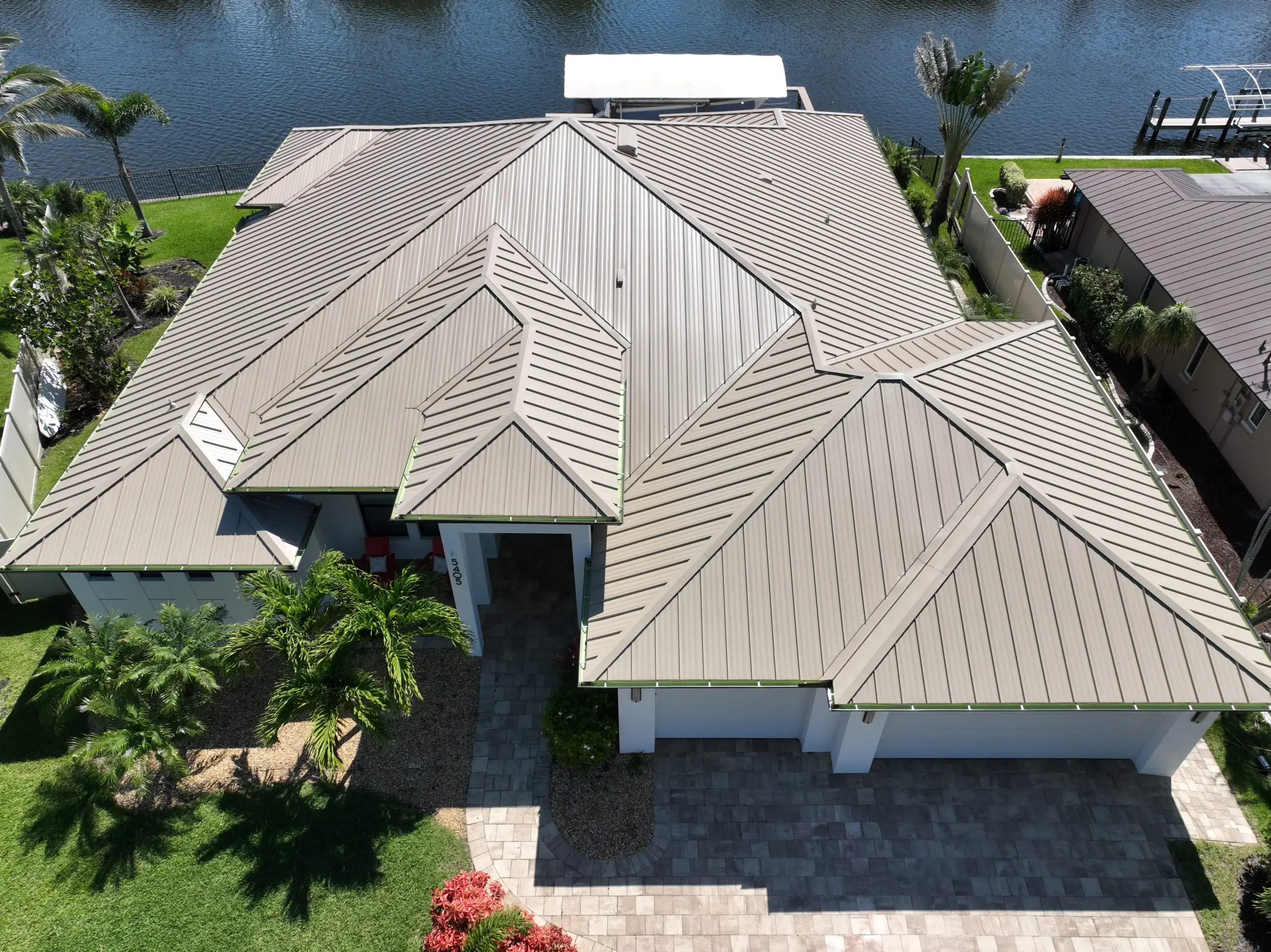
The metal vs. shingles debate gets intense in Florida. Both options have passionate supporters, and both perform well in our climate. Here's an honest comparison of cost, lifespan and storm performance to help you decide.
In this guide
Metal Roofing: The Pros
Metal roofing has surged in popularity, and for good reason:
- 40-70 year lifespan (vs. 20-30 for shingles)
- Superior wind resistance up to 140+ mph
- Energy efficiency reflects heat, lowering AC costs 10-25%
- Fire and pest resistant won't rot, crack, or harbor insects
- Low maintenance no granule loss or moss growth
- Lightweight easier on your structure than tile
Metal Roofing: The Cons
Metal isn't perfect. Consider these drawbacks:
- Higher upfront cost 2-3x more than shingles
- Noise concerns rain can be louder (proper underlayment helps)
- Denting potential from hail or falling branches
- Expansion/contraction requires proper fastening systems
- Color fading some finishes fade over 15-20 years
- Specialist repairs a damaged panel needs a crew that works on metal, not just any roofer
Asphalt Shingles: The Pros
Architectural shingles remain America's most popular roofing choice:
- Lower initial cost most affordable quality option
- Easy repairs any roofer can work on shingles
- Proven performance decades of Florida track record
- Style variety hundreds of colors and profiles
- Quieter absorbs sound better than metal
Get your Metal Roofing quote.
Free on-site inspection · fast, local scheduling · no pressure.
Asphalt Shingles: The Cons
Shingles have their limitations:
- Shorter lifespan 20-30 years in Florida conditions
- Less wind resistant 110-130 mph vs. metal's 140+
- Heat absorption darker shingles can increase cooling costs
- Algae growth common in Florida's humidity
- Storm vulnerability granule loss and blow-offs
Metal vs Shingle Cost for a 2,000 sq ft Roof
| Factor | Shingles | Metal |
|---|---|---|
| Installation | $12,000-18,000 | $25,000-40,000 |
| Lifespan | 25 years | 50 years |
| Cost Over 50 Years | $24,000-36,000 | $25,000-40,000 |
| Annual Energy Savings | - | $200-400 |
When you factor in lifespan and energy savings, metal often costs the same or less over time. The catch is that you pay for all fifty years on day one, so the math only works if you stay in the house. For the wider price picture, see our Florida roof replacement cost guide.
Metal Roof Cost by Panel Type
Within metal, the panel system moves the price more than anything else. Typical installed prices per square foot:
- Exposed-fastener panels: $7-$12. The budget metal option, with screws through the face that need checking and retightening over the years.
- Metal shingles and stone-coated steel: $10-$16. Shingle, shake or tile looks with metal underneath, a common answer where an HOA wants a traditional appearance.
- Standing seam: $12-$18. Concealed fasteners, the highest wind ratings and the least maintenance, and the reason the metal column above tops out where it does.
Our standing seam vs exposed fastener comparison goes deeper on the two most common panel systems.
Shingle Cost by Grade
Shingles have their own spread on the same 2,000 sq ft roof. 3-tab runs roughly $8,000-$11,000, architectural (the table above) $12,000-$18,000, and designer profiles $18,000-$26,000. A designer-shingle quote can land within reach of exposed-fastener metal, which is worth knowing before you rule metal out on price.
Lifespan by Roof Type in Florida
Florida sun and humidity shorten every roof's life compared with the numbers on a product brochure. What we expect here:
| Roof type | Typical Florida lifespan |
|---|---|
| 3-tab shingles | 12-18 years |
| Architectural shingles | 20-25 years |
| Designer shingles | 25-30 years |
| Exposed-fastener metal | 30-40 years |
| Metal shingles / tiles | 40-50 years |
| Standing seam metal | 40-60+ years |
That is why a single standing seam roof can outlast two or three shingle roofs, and why the 50-year line in the cost table looks so different from the install line.
Get your Metal Roofing quote.
Free on-site inspection · fast, local scheduling · no pressure.
Performance in Florida Weather: Heat, Rain and Wind
Central Florida roofs deal with three stresses at once: months of intense sun, daily summer thunderstorms, and the occasional tropical system. Asphalt shingles respond to heat by slowly losing the granules that shield the mat underneath, and a roof that sits under a hot attic can age faster than the same product would in a milder state. Metal panels do not shed granules, and a reflective finish sends part of the solar load back into the sky instead of into the attic.
The surface temperatures show the gap. On a summer afternoon, dark shingles can reach 150-170°F and light shingles 120-140°F, while metal with a cool-roof coating tends to stay around 100-120°F. A reflective metal roof can keep the attic 25-40°F cooler, which is where the cooling savings come from. Modern cool-roof shingles narrow the difference but do not close it.
Wind is where installation matters as much as material. Shingles fail at the edges first, usually where sealant strips have weakened and tabs lift during a gust. Metal fails differently, most often at fasteners, seams and flashing details if the system was not installed to match its rating. In both cases, the roof deck attachment, underlayment and edge metal under the surface decide how the roof behaves in a storm. Ask for the fastening pattern and product wind rating in writing for either option.
Heavy rain tests drainage details more than the surface itself. Valleys, chimney flashings and wall transitions are the usual leak points on any roof type, and Eustis homes with mature oaks add leaf debris and moisture that stay on shingles longer. A free inspection from Pro Specialty Services can show how your current roof is aging, so you can compare real conditions instead of general claims.
Wind and Impact Ratings
- Wind: standing seam systems are commonly rated for 140-180 mph, and because the panels interlock there are no individual pieces to peel off. Architectural shingles are typically rated 110-130 mph, and the top of that range usually depends on the manufacturer's enhanced (six-nail) fastening pattern.
- Impact: the UL 2218 test drops steel balls on the roof covering, and Class 4, the highest rating, means it survived a 2-inch ball dropped from 20 feet. Many metal panels carry Class 4. Standard shingles rate lower; impact-resistant shingles can reach Class 4 at a premium that narrows the price gap with metal.
For a closer look at which metal systems hold up best in storms, read the best metal roofing for Florida hurricanes.
Insurance Angle
Florida insurance is complicated, but metal roofs often help:
- Many insurers offer discounts for metal
- Impact-resistant shingles can also qualify for discounts
- Some insurers won't cover roofs over 15-20 years old
- Metal's longevity keeps you insurable longer
Discounts are tied to what a wind mitigation inspection documents, so ask your insurer how it credits roof covering, roof shape and deck attachment before you choose. The number for your own policy beats any average.
What Changes the Price on Your Roof
Two homes with the same square footage can get very different quotes. The usual reasons:
- Roof shape: a simple gable is the cheapest for both materials. Hip roofs cost more for metal because every hip means more panel cutting, often 10-15% more.
- Valleys and penetrations: each valley, skylight and vent adds labor and flashing, and metal is less forgiving of complex roofs than shingles.
- Pitch: steep roofs slow every crew down regardless of material.
- Tear-off and deck repair: removing the old roof and replacing rotten decking are real line items, and older Lake County roofs often need some deck work once the old covering is off.
- Permits: a Florida re-roof needs a permit and inspections either way, priced by the local building department.
Get your Metal Roofing quote.
Free on-site inspection · fast, local scheduling · no pressure.
Our Take: Which Roof Fits Your Home
There's no universal winner. Your choice should depend on:
- Budget: Tight now? Shingles. Can invest upfront? Metal.
- Timeline: Selling in 5-7 years? Shingles, because you won't recoup metal's higher cost. Staying 15-20+? Metal.
- Aesthetics: Some neighborhoods restrict metal appearance. Metal shingles or stone-coated steel can be an acceptable compromise, and in historic areas like downtown Mount Dora, architectural shingles may suit the street better.
- Structure: Older homes may need reinforcement for heavy metal.
- Storm priority: If maximum hurricane protection matters most, standing seam is the strongest residential option when it is installed to its rating.
Types of Metal Roofing
If you're leaning toward metal, you have options:
- Standing seam: Premium, hidden fasteners, best performance
- Corrugated panels: Budget-friendly, exposed fasteners
- Metal shingles: Looks like traditional shingles with metal benefits
- Stone-coated steel: Metal durability with tile aesthetics
How to Compare Metal and Shingle Quotes
The fairest comparison is two quotes written the same way. Ask for:
- An itemized price for each material, with the same underlayment, edge metal and accessories on both
- The product wind rating and fastening pattern for each option, in writing
- The manufacturer warranty and the workmanship warranty, and what each one covers
- The expected maintenance for each roof over its life
Be careful with an unusually low metal quote (often thin panels or exposed fasteners sold as premium), a contractor who never mentions wind ratings, vague warranty terms, and pressure to sign the same day.
Want personalized advice? Our team can evaluate your home and give recommendations based on your specific situation - not just what's most profitable for us.
Metal Roofing questions from Lake County homeowners
How much more does a metal roof cost than shingles in Florida?
On a typical 2,000 sq ft roof, architectural shingles run about $12,000-$18,000 installed and metal about $25,000-$40,000, so metal usually costs roughly two to three times as much up front. Exposed-fastener panels close part of that gap; standing seam sits at the top of the range.
How much does a metal roof cost per square foot in Florida?
Installed, exposed-fastener panels typically run $7-$12 per square foot, metal shingles and stone-coated profiles $10-$16, and standing seam $12-$18. Roof shape, tear-off and deck repairs move the final number.
Is a metal roof or a shingle roof better in a Florida hurricane?
Standing seam systems are commonly rated for 140-180 mph winds, while architectural shingles are typically rated 110-130 mph. Either one only performs to its rating when the deck attachment, underlayment, edge metal and fastening pattern are installed to match, so ask for the rating and fastening schedule in writing.
How long do metal and shingle roofs last in Florida?
Architectural shingles usually last 20-25 years here, designer shingles 25-30 and 3-tab 12-18. Exposed-fastener metal typically lasts 30-40 years, metal shingles 40-50 and standing seam 40-60 or more.
Get this done in your town
Related Services
More on Metal Roofing