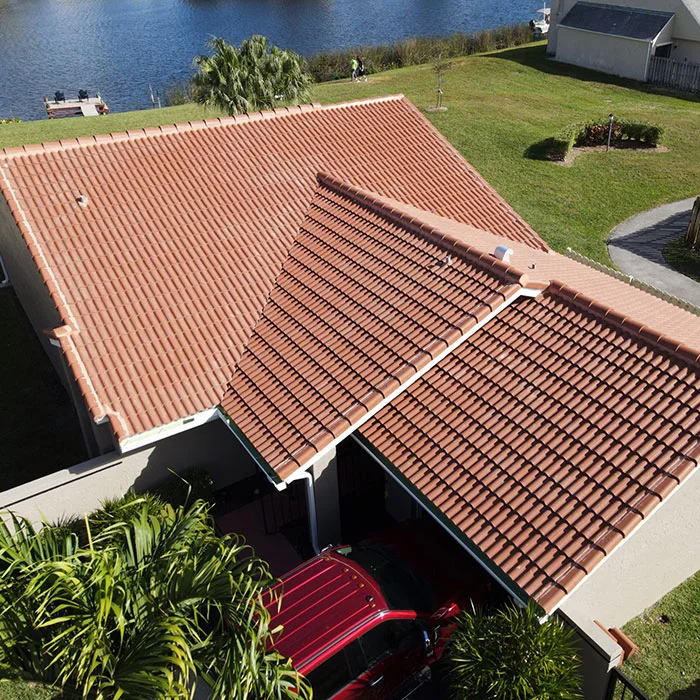
The elegant appearance of tile roofing comes with a practical consideration: weight. Concrete and clay tiles weigh significantly more than other roofing materials, and not every structure can support them. Here's what you need to know.
In this guide
Tile Roofing Weight Comparison
To understand the impact, compare typical weights per square foot:
- Asphalt shingles: 2-4 lbs
- Metal roofing: 1-2 lbs
- Concrete tile: 9-12 lbs
- Clay tile: 8-10 lbs
- Natural slate: 10-15 lbs
A 2,500 square foot roof with concrete tile adds approximately 25,000-30,000 pounds to your structure. That's the weight of several cars distributed across your roof.
Homes Designed for Tile
Many Florida homes were built specifically for tile roofing. If your home:
- Currently has tile roofing
- Was built by a developer who typically uses tile
- Was designed with tile in the original specifications
...it almost certainly has the structural capacity for tile. The engineering was done when the house was designed.
Converting from Shingles to Tile
This is where structural assessment becomes critical. A home built for asphalt shingles was engineered for 2-4 pounds per square foot - not 10-12. Adding tile could potentially:
- Overstress rafters and trusses
- Cause ceiling cracks and settling
- In extreme cases, risk structural failure
Never assume a shingle-designed home can accept tile without professional evaluation.
Get your Tile Roofing quote.
Free on-site inspection · fast, local scheduling · no pressure.
Structural Assessment Process
A proper evaluation involves:
1. Framing Review
Examining rafter or truss size, spacing, and span. Larger, closer-spaced members indicate greater capacity.
2. Connection Inspection
How rafters connect to walls and ridge affects load distribution. Hurricane ties and reinforced connections are positive signs.
3. Load Calculation
Engineering calculations determine actual load capacity versus required capacity for tile. This accounts for:
- Dead load (roof materials)
- Live load (workers, equipment, temporary loads)
- Wind uplift forces
- Local code requirements
4. Recommendations
The assessment concludes with one of:
- Structure can accept tile as-is
- Reinforcement needed (with specifications)
- Tile not recommended for this structure
Reinforcement Options
If reinforcement is needed, common approaches include:
- Sister rafters: Adding new rafters alongside existing ones
- Cross bracing: Additional bracing between trusses
- Collar ties: Horizontal members connecting opposing rafters
- Ridge beam reinforcement: Strengthening the main ridge
- Wall plate upgrades: Reinforcing where rafters meet walls
Reinforcement adds cost but may be worthwhile if tile roofing is strongly desired.
Lightweight Alternatives
For homes that can't accept traditional tile, alternatives include:
Lightweight tile (composite materials): 1-3 lbs per square foot - similar to shingles but resembling tile
**Stone-coated steel**: 1-2 lbs per square foot with tile-like appearance
Metal shingles: Various profiles that mimic traditional materials
These products sacrifice some authenticity for practical installation on any structure.
Insurance and Code Considerations
Beyond structural safety, consider:
- Building codes: Permit applications for re-roofing may require structural verification
- Insurance: Some insurers ask about roof material; changing to tile may require notification
- Wind ratings: Properly installed tile has excellent wind resistance - potentially lowering insurance
Making the Decision
If you love tile roofing but have a shingle home:
- Get a professional structural assessment first
- Understand reinforcement costs if needed
- Compare total cost to alternatives (metal, stone-coated steel, lightweight tile)
- Make an informed decision based on complete information
Sometimes reinforcement makes sense. Other times, alternatives provide tile appearance without structural complexity.
At Pro Specialty Services, we assess structural suitability as part of every tile roof proposal. We'd rather tell you honestly that reinforcement is needed than have problems after installation. Your safety and satisfaction are worth the upfront assessment.
Related Services
More on Tile Roofing
Tile Roof Underlayment: When and Why It Needs Replacement
Next →Florida Building Codes for Roofing: What Homeowners Should Know
Get Roofing Tips
Seasonal maintenance reminders and honest advice from the crew. No spam.