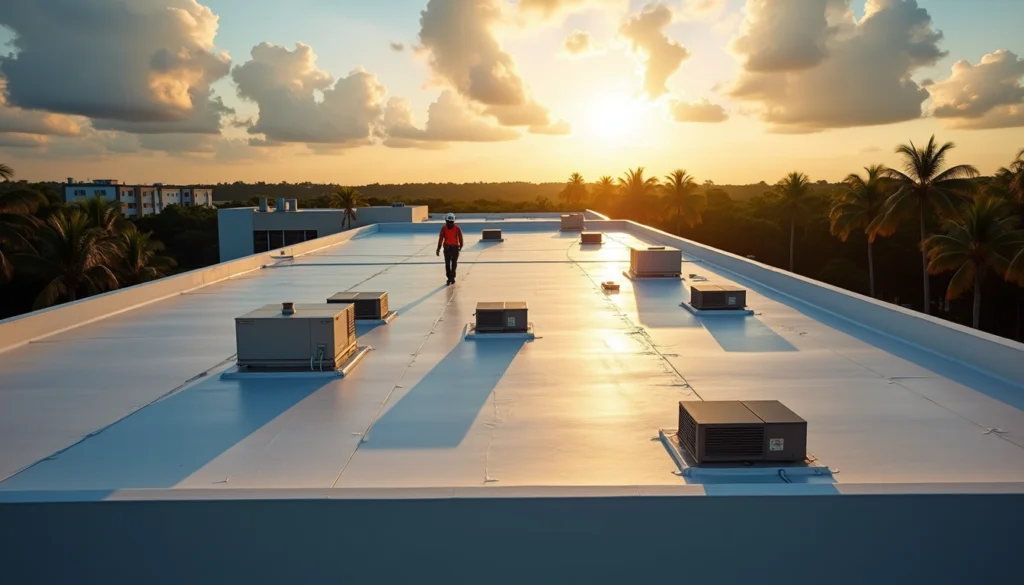
TPO (Thermoplastic Polyolefin) roofing has become the most popular choice for flat roofs in Florida. But is it right for your property? Here's an honest breakdown of TPO's advantages and limitations.
In this guide
What Is TPO Roofing?
TPO is a single-ply membrane made from polypropylene and ethylene-propylene rubber. It's been in use since the 1990s and has evolved significantly as manufacturers refined their formulations.
The Pros of TPO Roofing
Energy Efficiency
TPO's white reflective surface is its biggest selling point in Florida:
- Reflects up to 90% of UV rays
- Reduces roof surface temperature by 50-60°F vs. dark roofs
- Can cut cooling costs by 10-30%
- Meets Energy Star and Cool Roof requirements
Get your Flat Roofing quote.
Free on-site inspection · fast, local scheduling · no pressure.
Heat-Welded Seams
Unlike EPDM's adhesive seams, TPO seams are heat-welded:
- Creates bonds stronger than the membrane itself
- Seams won't fail from UV exposure or temperature cycling
- Better performance in Florida's heavy rains
Chemical and Algae Resistance
TPO handles Florida's environmental challenges well:
- Resists algae and mold growth
- Tolerates occasional chemical exposure
- Handles ponding water better than some alternatives
Competitive Pricing
TPO typically costs $5-$10 per square foot installed—less than PVC but more than EPDM. For most Florida properties, it's the sweet spot between performance and value.
The Cons of TPO Roofing
Quality Varies by Manufacturer
Early TPO formulations had failure issues. While major manufacturers have resolved these problems, cheap TPO from unknown sources can still fail prematurely. We only install TPO from proven manufacturers.
Newer Track Record
TPO has been around since the 1990s, but PVC and EPDM have 60+ year histories. While modern TPO performs well, it lacks the decades-long field data of older systems.
Get your Flat Roofing quote.
Free on-site inspection · fast, local scheduling · no pressure.
Installation Sensitivity
TPO heat welding requires:
- Proper equipment and training
- Correct temperature settings for conditions
- Clean, dry seam surfaces
- Experienced installers (like our certified team)
Poor installation undermines TPO's advantages.
Limited Repair Options
TPO repairs require proper welding equipment. DIY patches with adhesive won't last like proper heat-welded repairs.
TPO vs. Other Flat Roof Materials
How does TPO compare? See our detailed comparison of EPDM vs TPO vs PVC for a complete breakdown.
Is TPO Right for You?
TPO is ideal for:
- Florida homes and businesses wanting energy savings
- Properties with minimal rooftop chemical exposure
- Budget-conscious projects that still want quality
Consider PVC instead if:
- You have a restaurant with grease exhaust
- Your building has chemical exposure
- You need the absolute longest lifespan
The Bottom Line
For most Central Florida flat roofs, TPO offers the best balance of performance, energy efficiency, and value. The key is quality materials installed by experienced professionals.
Contact us for a free flat roof assessment and TPO quote.
Related Services
More on Flat Roofing
Get Roofing Tips
Seasonal maintenance reminders and honest advice from the crew. No spam.