ROOF REPLACEMENT
We're the Lake County roof replacement contractor homeowners trust when their old roof has earned a new one. Licensed Florida roofer (FL #CCC1335465) based in Eustis - full tear-offs, re-decking when needed, manufacturer-spec installation, and a 5-year workmanship warranty in writing. Caleb personally oversees every replacement. Call (352) 272-8854 or get a free estimate online.
Expert Roof Replacement Services in Lake County
At Pro Specialty Services, we understand the weight of this decision. That's why we take time to educate homeowners about their options, provide detailed written estimates, and stand behind our work with comprehensive warranties. Owner Caleb Hutchinson personally oversees every replacement project, ensuring the same attention to detail that's earned us a 5-star reputation across Lake County.
Whether your roof has reached the end of its lifespan, suffered irreparable storm damage, or you're simply ready to upgrade to more durable materials, our team delivers professional installation that exceeds both manufacturer specifications and Florida building codes. We also address critical components like soffit and fascia to ensure your entire roofing system is properly sealed and protected.
Why Roof Replacement is a Smart Investment
Many homeowners delay roof replacement, but waiting too long can cost you more in the long run. An aging roof with multiple repairs becomes increasingly expensive to maintain, and the risk of catastrophic failure during a storm grows each year. A new roof eliminates these ongoing costs and worries.
Beyond protection, a new roof significantly impacts your home's value and curb appeal. Real estate studies consistently show that roof replacement offers one of the highest returns on investment of any home improvement project - often recovering 60-70% of the cost at resale while making your home more attractive to buyers.
Energy efficiency is another major benefit. Modern roofing materials reflect more solar radiation than older products, reducing attic temperatures and lowering cooling costs. Many homeowners see meaningful reductions in their monthly energy bills after upgrading their roof.
Roofing Materials We Install
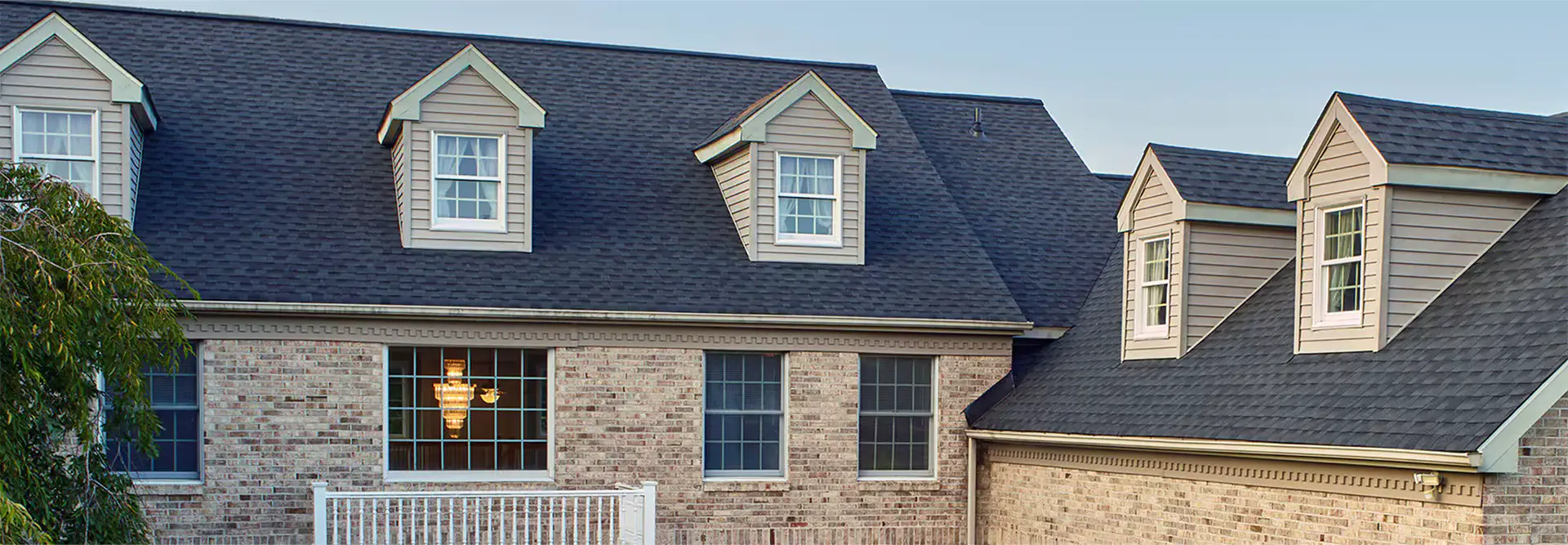
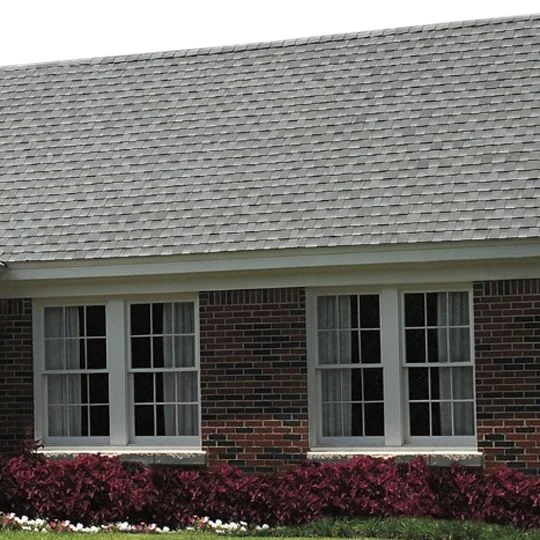
Asphalt Shingles
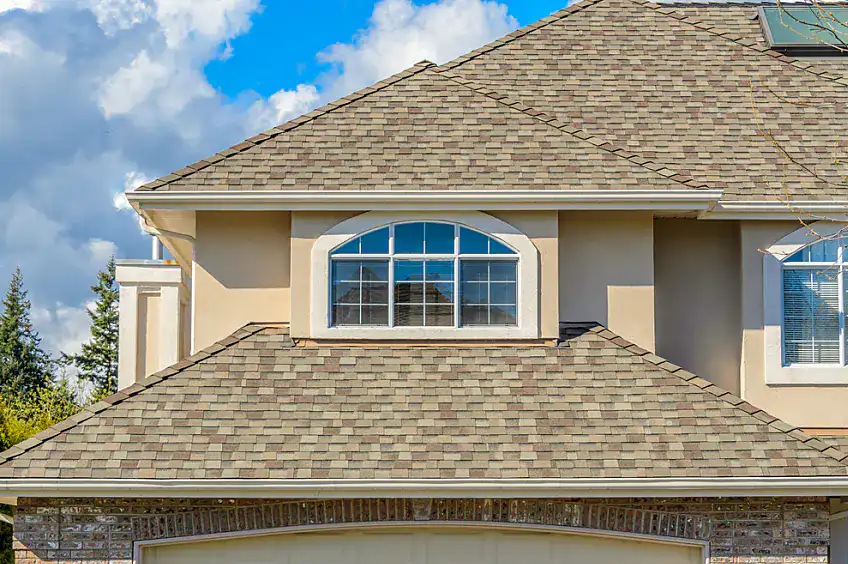
The most popular choice for Florida homes. We install architectural and designer shingles from GAF, Owens Corning, and CertainTeed with warranties up to 50 years.
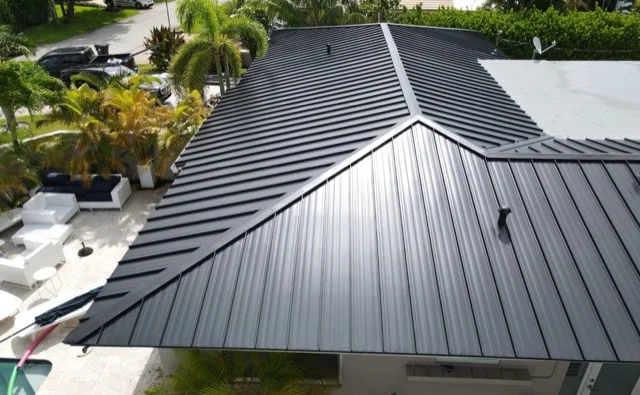
Metal Roofing
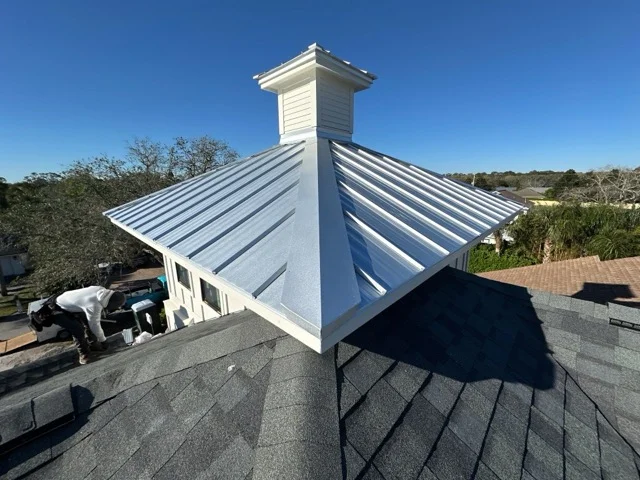
Exceptional durability and wind resistance. Standing seam and exposed fastener options in various colors and profiles. Excellent for Florida's climate.
Tile Roofing
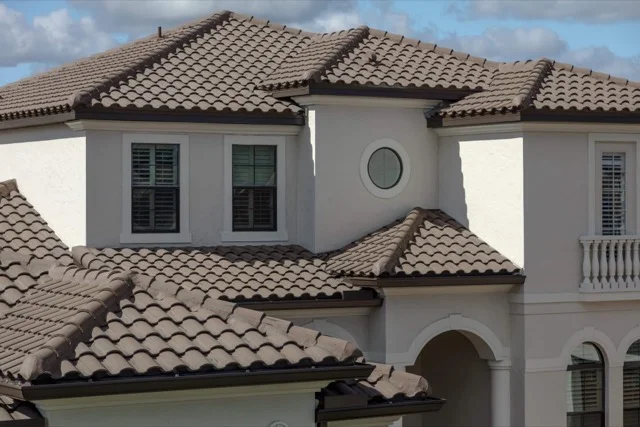
Concrete and clay tiles offer unmatched longevity and classic Florida aesthetics. We're experienced in both new installation and tile-to-tile replacement.
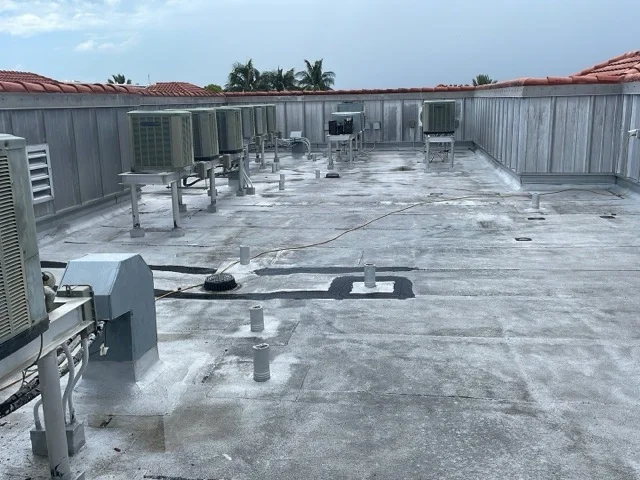
Flat Roofing
TPO, EPDM, and modified bitumen systems for low-slope applications. Energy-efficient options available for reduced cooling costs.
Ready to Get Your Roof Fixed?
Schedule your free inspection today. Honest assessment, transparent pricing, no pressure.
Our Replacement Process
Roof Assessment
Thorough inspection of decking, structure, and ventilation. We identify hidden damage before work begins.
Material Selection
Review options, colors, and warranties. We help you choose the best system for your home and budget.
Tear-Off & Installation
Remove old roofing, repair decking, install underlayment and new roof to manufacturer specifications.
Final Inspection
Complete walkthrough verifying every detail. Warranty registration and maintenance guidelines provided.
Current Promotions
$500 OFF Full Roof Replacement
Military & First Responders
Thank you for your service! Military members, veterans, first responders, teachers, and healthcare professionals receive $500 off any full roof replacement.
Learn More*Cannot be combined with other offers. Single family residential homes only. Not valid on insurance claims.
Flexible Financing Available
0% Interest Options
Affordable monthly payments as low as $99/month. 12 months no interest financing available for qualified buyers.
Apply NowRoof Replacement for Florida Subtropical Climate
Florida UV and Humidity Stress
Florida intense UV radiation degrades roofing materials 2-3x faster than northern climates. Combined with humidity averaging 75%+ year-round, even quality materials need specific specifications to last. Lake County properties also face afternoon thunderstorms from May through October that test every flashing seal and valley joint.
Hurricane and Wind Resistance
Lake County sits in a 130mph wind zone per the Florida Building Code. Our roof replacement projects meet or exceed FBC wind uplift ratings with proper fastening schedules and impact-resistant materials when applicable. We document everything to support insurance discounts on wind mitigation forms.
Building Code Compliance
Florida Building Code requirements are among the strictest in the country. We work with Lake County building inspectors regularly and understand exactly what passes inspection, saving you delays, reinspection fees, and the headaches that come with non-compliant work.
Signs You Need Roof Replacement
While repairs can extend your roof's life, sometimes replacement is the better investment. Consider replacement if you notice:
Age Over 20 Years
Most asphalt shingle roofs in Florida reach the end of their effective lifespan around 15-20 years due to intense UV exposure and storm stress.
Multiple Leak Points
When leaks appear in multiple areas, especially after repairs, the underlying system has likely failed.
Widespread Granule Loss
Excessive granules in gutters or bald spots on shingles indicate the protective layer is gone.
Sagging or Structural Issues
Visible sagging suggests deck damage that requires full replacement to address properly.
Storm Damage Over 25%
When more than a quarter of your roof is damaged, replacement often costs less than extensive repairs.
Rising Energy Bills
Poor roof condition affects attic insulation performance, increasing cooling costs.
ROOF REPLACEMENT Projects
What Our Customers Say
"Our 22-year-old roof was showing its age. Pro Specialty helped us choose the right shingles and completed the replacement in two days. The crew was professional, cleaned up perfectly, and our new roof looks amazing!"
"After getting quotes from four companies, PSS offered the best value with quality materials. Caleb explained everything clearly and the installation exceeded expectations. Highly recommend!"
"Insurance covered our storm damage replacement and PSS handled all the paperwork. They made a stressful situation so much easier. The new metal roof looks beautiful and we feel secure for the next hurricane season."
Ready for a free, no-pressure estimate?
On-site inspection, photos of every problem area, and a written quote within 24 hours. No sales pitch, no one-day pricing.
What Makes Roof Replacement Different in Lake County
Microclimate Considerations
Lake County is not one climate, it is many. Properties in different neighborhoods face different challenges that affect roof replacement decisions.
Waterfront Properties
Homes near Lake Eustis, Lake Dora, and Lake Harris experience higher humidity and mineral content in lake spray. We recommend specific approaches for waterfront properties to maximize longevity.
Historic Districts
Properties in Mount Dora and Eustis historic districts must balance preservation guidelines with modern performance. We have experience with historic preservation requirements.
New Construction Areas
Clermont, Groveland, and Minneola new construction follows the latest Florida Product Approval standards. Older homes in Leesburg and Tavares may have outdated systems needing complete upgrades.
HOA and Permit Requirements
We know which neighborhoods have HOA restrictions, which areas require permits, and which homes typically need special considerations during roof replacement projects. This local knowledge prevents surprises and delays.
The PSS Advantage
Manufacturer-Spec Installation
Every roof we install follows the manufacturer's published installation specification - the same spec that the standard limited warranty actually requires.
Complete Tear-Off
We remove all old materials to inspect and repair the deck - no layovers that hide problems and void warranties.
Licensed & Insured
Florida certified roofing contractor CCC1335465. Full liability and workers' comp coverage protects you.
Financing Available
Multiple financing options with competitive rates. Get the roof you need with payments that fit your budget.
Written Warranties
Manufacturer material warranties plus our workmanship warranty give you complete protection.
Insurance Assistance
We work with your insurance company on storm damage claims, handling documentation and adjuster meetings.
Common Questions
Most residential roof replacements are completed in 1-3 days, depending on roof size, complexity, and weather. We'll provide a specific timeline in your proposal and keep you updated throughout the project.
You don't need to be present, though many homeowners like to be available for questions. We'll coordinate access and keep you informed via phone or text throughout the process.
We monitor weather closely and plan accordingly. If rain is expected, we ensure your home is fully protected before stopping work. We never leave a roof exposed overnight without proper protection.
We help you weigh factors including your budget, aesthetic preferences, durability requirements, and HOA restrictions. We provide samples and can show you completed projects with different materials.
Often yes, especially if you upgrade to impact-resistant materials. Many Florida insurers offer significant discounts for new roofs meeting certain wind and impact ratings. We can provide documentation for your insurance company.
You receive the manufacturer's material warranty (up to 50 years depending on product) plus our workmanship warranty. We register all warranties in your name and provide copies for your records.
- Related services
Often paired with roof replacement.
Trades we recommend scoping together if we're already on-site.
Roof Repair
Roof Inspection
Roof Certification
Insurance Restoration
- From the blog
Before you book - read this.
- Service area · Lake Co FL
Roof Replacement across Lake County.
Seventeen cities, one licensed crew. Same warranty, same phone number whether you're in Eustis or Minneola.
- Roofing Services
Every roofing services job we take.
Ready for your free roof replacement estimate?
Same-day response across Lake County. Honest recommendations, transparent pricing, and a warranty in writing.
The Pro Specialty Services Roof Replacement Difference
Licensed and Local
Pro Specialty Services is a fully licensed Florida roofing contractor (CCC1335465) headquartered in Eustis. We are not a corporate chain or storm-chasing out-of-state company. We are your neighbors, and we have built our business on honest assessments, transparent pricing, and quality work.
Our Process
Every roof replacement project follows the same proven approach.
Free Inspection
We start with a thorough, no-pressure inspection. We document existing conditions, identify issues, and explain everything in plain language.
Detailed Written Estimate
You receive a complete itemized estimate with no hidden fees. We explain exactly what we recommend, what materials we will use, and what the timeline looks like.
Quality Workmanship
Our crews are full-time employees, not day laborers. They treat every home like their own, with manufacturer warranties on materials and our workmanship guarantee backing every project.
More Questions About Roof Replacement
Costs vary significantly based on the scope, materials, and property specifics. After a free inspection, we provide a detailed written estimate so you know exactly what to expect with no hidden fees.
Yes. We work directly with your insurance adjuster, provide detailed damage documentation, and guide you through the claims process from start to finish.
Most projects are completed within 2-7 days depending on size and complexity. We provide a specific timeline during your free estimate.
Yes. Pro Specialty Services is a fully licensed Florida roofing contractor (CCC1335465) with comprehensive general liability and workers compensation insurance.